How to Know If Stress Is Making You Sick
Discover 5 stress illness symptoms associated with chronic stress. Learn how to recognize if stress is making you sick & science-backed healing strategies beyond medication. Physician expert guide.
MINDSETPRIMARY CAREWELLNESSLIFESTYLEPREVENTION
Akeira Johnson, MD
11/19/20255 min read

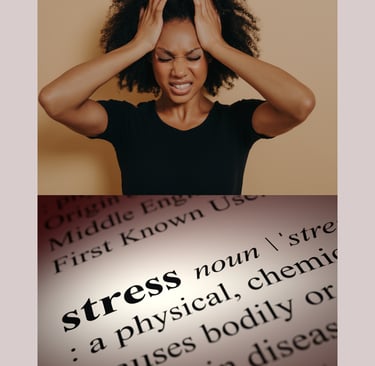
Stress Is Making You Sick
Can you be successful and still be falling apart?
The answer is yes. I know because I lived it. Fifteen years into my medical career, I had everything that looked like success from the outside—a thriving practice, respected position, financial stability, the whole package. But my body was telling a completely different story. And it wasn't whispering anymore. It was screaming.
Here's what "having it all together" actually looked like for me: blood pressure creeping to dangerous heights—hypertensive urgency landed me in the ER twice, once to rule out stroke-like symptoms. Migraines that went from manageable to relentless. New-onset anxiety and insomnia that blurred my days until I forgot what peace felt like.
The irony? I'm a physician. The healer who couldn't heal herself. I was preaching prevention and balance to my patients while my own body was silently pleading for both. Somewhere between the endless charts, 15-minute visits, and the invisible expectation to "keep it all together," I began to unravel. The common denominator in all of it? Stress. Not the kind you complain about over coffee. The kind that rewrites your physiology without your permission.
The 5 Warning Signs Stress Is Making You Sick
Looking back, the signals were there long before the ER visits. I just wasn't listening. Here's what survival mode actually looks like—and what I wish I'd recognized sooner:
1. Your Body Keeps Score Even When You're "Fine"
You tell everyone you're good. You show up. You perform. But you don't get adequate sleep, you have an unbalanced diet, and there is little to no designated recovery time. You feel "fine" until physical symptoms that seem to come "out of nowhere" are actually your body's urgent memo that you've been ignoring the rough drafts. The research shows that chronic stress activates your hypothalamic-pituitary-adrenal (HPA) axis repeatedly, flooding your system with cortisol. Over time, this leads to hypertension, metabolic dysfunction, and immune suppression—even when you feel fine mentally.
2. You're Treating Symptoms Instead of Understanding Signals
You pop a pill for the headache. Drink more coffee for the exhaustion. Scroll to numb the anxiety. But the symptoms keep returning because you're not addressing what they're trying to tell you. Your body doesn't create symptoms to punish you—it creates them to communicate. Pain, fatigue, and inflammation are your body's alarm system saying "something needs to change." Relief is temporary because you're managing symptoms, not healing the source.
3. Rest Feels Like a Luxury You Can't Afford
You tell yourself you'll rest "when things calm down" or "after this project." But things never calm down because you've normalized survival mode as your baseline. Studies show that chronic stress shrinks the hippocampus (memory center) and enlarges the amygdala (fear center), literally rewiring your brain to perceive rest as threatening rather than restorative. You can't remember the last time you felt truly rested, even after a full night's sleep.
4. You're Running on Autopilot (And You Know It)
Your days blur together. You're going through the motions but not fully present. You're efficient but not fulfilled. Productive but not peaceful. When your nervous system is chronically dysregulated, your prefrontal cortex (decision-making center) goes offline and your limbic system (survival brain) takes over. You operate in reactive mode, not responsive mode. You've stopped asking yourself what you actually want because you're too busy managing what you have to do.
5. The Version of Yourself You Present Doesn't Match How You Feel Inside
You keep it together in public. You're competent, capable, confident. But alone, you're exhausted, anxious, and wondering how long you can keep this up. This is called "high-functioning stress"—and it's the most dangerous kind because it's invisible to others and often dismissed by yourself. The gap between your external performance and internal experience keeps widening.
The Healing Framework: Beyond the Prescription Pad
Here's what most wellness advice gets wrong: you don't need more information. You need a different relationship with your body. For the first time, I had to face the truth I'd been outrunning: I wasn't well. Not physically. Not emotionally. Not spiritually. My life had become a prescription pad of stress and survival—but no one had written me an order for rest, softness, or self-compassion. But I didn't want to just "treat" myself. I wanted to heal.
Step 1: Listen Before You Demand
Your body has been sending signals. Stop overriding them with caffeine, willpower, and "pushing through." I developed a relationship with my body like an old friend I hadn't heard from in a while. I listened before I demanded. I started noticing cues from a place of compassion, not survival. Create a daily practice of asking: What is my body trying to tell me today?
Step 2: Respond, Don't React
Create a gap between stimulus and response. When you feel tension rising, pause. Breathe. Choose your next action consciously rather than defaulting to survival patterns. I learned to hear the whispers before the shutdowns, feel the tension before the tears. I learned to nurture, not numb.
Step 3: Remove What No Longer Serves
This isn't about adding more wellness tasks. It's about confidently removing what doesn't support where you're going—whether that's commitments, relationships, or beliefs about what you "should" be doing. I confidently removed what didn't support where I was going and excused myself from where I couldn't be fully present.
Why This Matters More Than Another Medication
I'm not anti-medicine. I'm a physician. I prescribe medications when needed. But here's what I learned through my own hypertensive crisis: the medicine we often need first isn't found in a pill bottle. It's found in personal awareness, mind-body connection, and the courage to prioritize presence over performance. As I healed, I realized something powerful: I wasn't alone. Every clinic day, I saw versions of myself walking through the door—exhausted, overwhelmed, trying to fix symptoms instead of understanding the signals.
Your Next Step: Begin Before the Crisis
You don't have to wait for an ER visit to make a change. Starting where you are—even with just a thought, a permission slip, an acknowledgment—that still counts. That matters. I began at the beginning—reintroducing myself to myself. Slowly. Deliberately. Gently. I gave myself permission to heal in stillness that felt safe. You can too.
Which warning sign resonated most with you?
Drop a comment below or hit reply and tell me—where are you experiencing stress in your body right now? What signal have you been ignoring?
Ready to Transform Your Health Before the Medicine?
Your reflection matters because this isn't a lecture. It's a conversation.
Join the Before the Medicine community where we're transforming wellness from prescription to practice. When you sign up, you'll be the first to receive:
✨ Exclusive lifestyle medicine frameworks you won't find anywhere else
✨ Early access to transformation programs designed for sustainable wellness
✨ Weekly mindset tools to shift from survival to thriving
Join the Community Here — Because you deserve guidance that honors where you are while supporting where you're going.
Remember: You're not behind if you're ready to be accountable today. Prevention isn't perfection—it's presence. And it starts before the medicine.
About the Author:
Dr. Akeira Johnson is a physician, lifestyle medicine expert, and founder of Beyond the Stethoscopes. In addition to still practiving clinical medicine, she now guides others in transforming their wellness through mindset mastery and evidence-based lifestyle planning—before the medicine is needed.

